
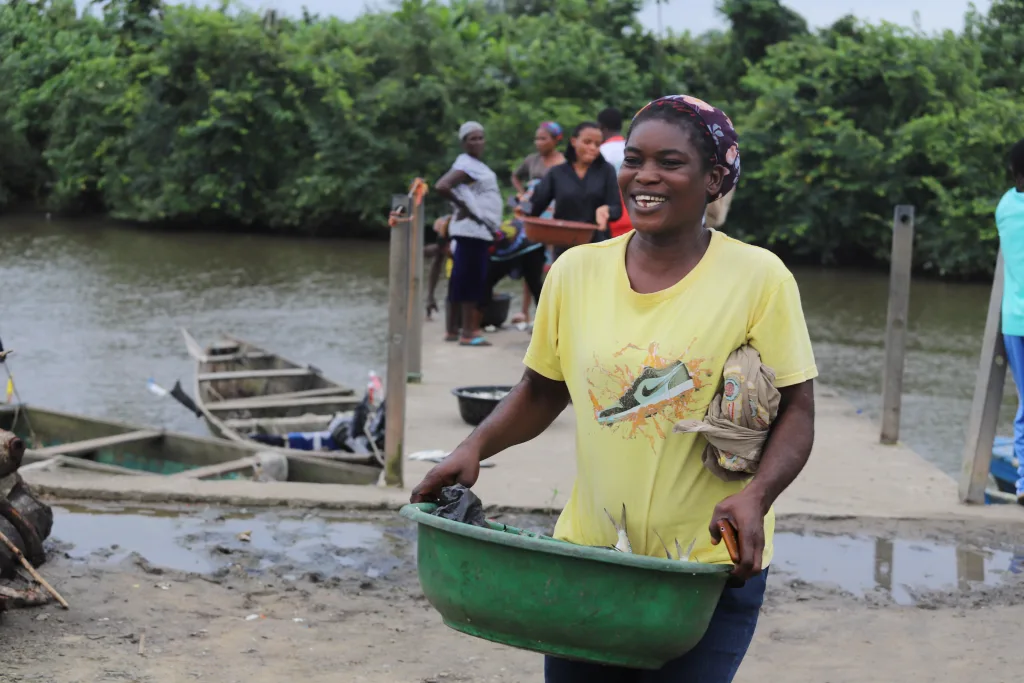
Fish trading has supported Peace Effiong’s family for years. Today, oil spills in Nigeria are reducing catches in her community and making the business she learned from her parents harder to sustain.
Peace Effiong has built her livelihood around a skill she learned from her parents: drying and selling fish. The 46-year-old lives in Iko, in Akwa Ibom State in Nigeria’s Niger Delta, where her family has depended on the trade for years.
She remembers when the rivers provided plentiful fish, and families could rely on clean water. Today, Peace says oil extraction has changed the environment around her.
Before oil drilling began in our community, there were fish in the rivers, crops grew well, and there was clean water to drink. Now the rivers are polluted with oil; there are no more fish; the crops barely grow in the hard, polluted soil, and even the rainwater I try to collect to drink is black from fumes.
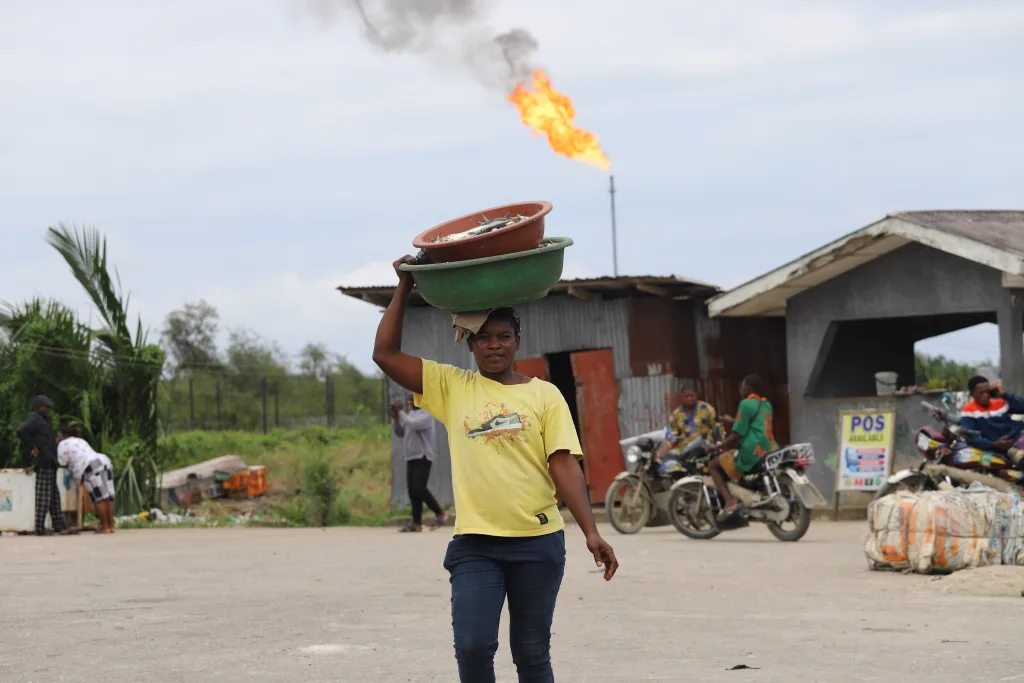
Peace says smaller catches are also pushing up the cost of buying fish to sell:
Before now, fishermen would return from the sea with full boats of fish, and women could buy a bowl of fish for between 8,000 naira ($5.95) and 10,000 naira ($7.43). But now, due to frequent oil spills, fish in our waters are dying, and fishermen struggle to make a catch. A bowl of fish now costs between 20,000 naira ($14.87)and 30,000 naira ($22.30). Making it difficult for women like me to continue our businesses.
At home, she is facing another cost. She says gas flaring has damaged a roof she had recently replaced:
The Zinc roof I changed less than a year ago has turned black because of gas flaring. When it rains, the water comes through onto my bed. I struggled to replace that roof, and now it is damaged again.
Replacing that roof again would be another expense at a time when her business is becoming harder to sustain. The damage Peace describes affects both her ability to earn a living and the home that income helps maintain.
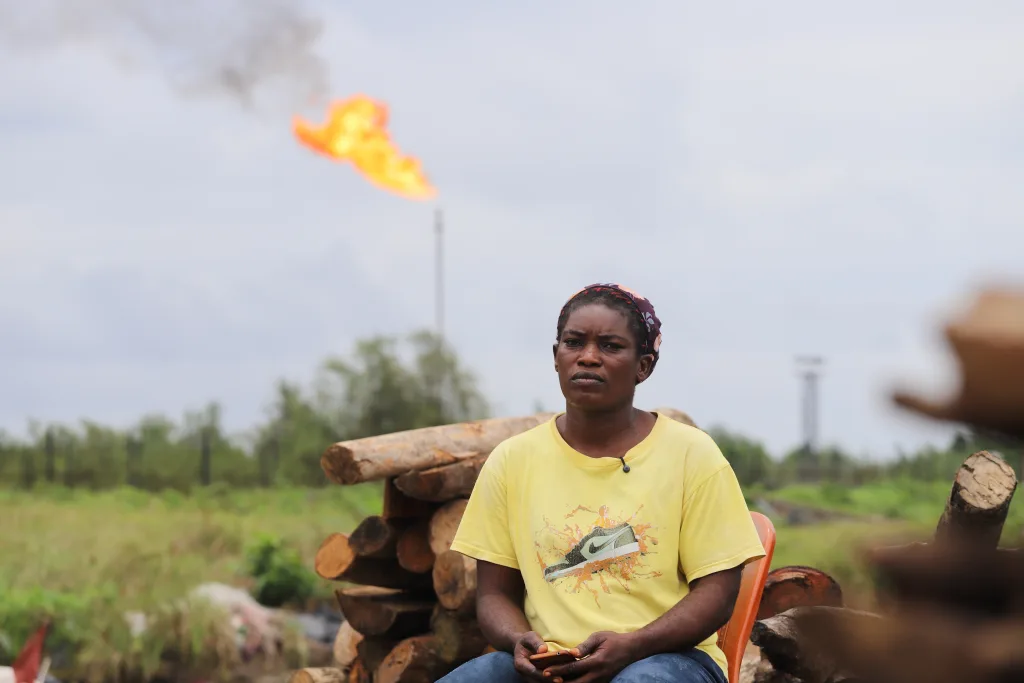
As world leaders prepare for COP31, ActionAid is calling for a strong, inclusive Just Transition Mechanism to support the shift away from fossil fuels. A just transition means protecting people’s livelihoods and rights as energy systems change. Women such as Peace, alongside workers, farmers and affected communities, must have a meaningful say in how that change happens.
A fair transition must also address the harm communities have already experienced. For Peace, the future of her fish business depends on the condition of the rivers around Iko. Women who depend on those waters must help shape what happens next.