The United States is the world’s largest historical emitter of carbon dioxide, and today it is the #1 producer of oil and gas. Yet Black, Brown, Indigenous, and coastal frontline communities across the country and around the globe continue to bear the heaviest consequences of a crisis they did little to create. From sacrifice zones in the American South to climate-ravaged nations in the Global South, the harm is happening daily and compounding.
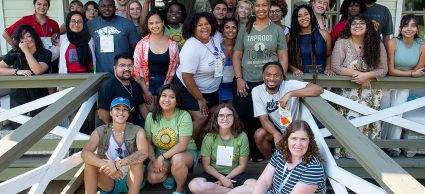
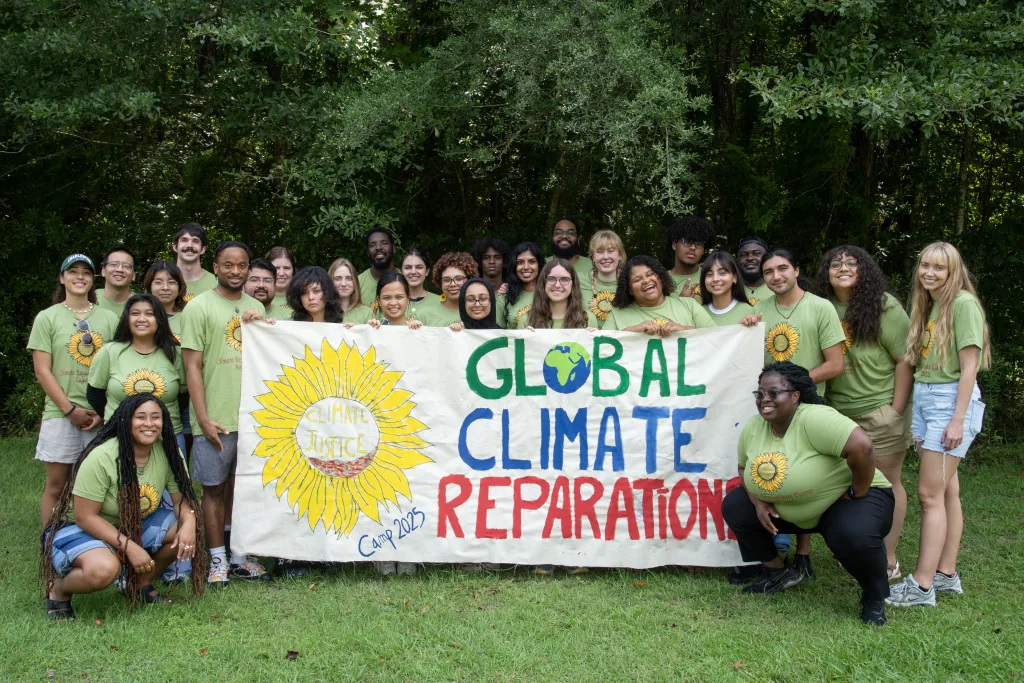
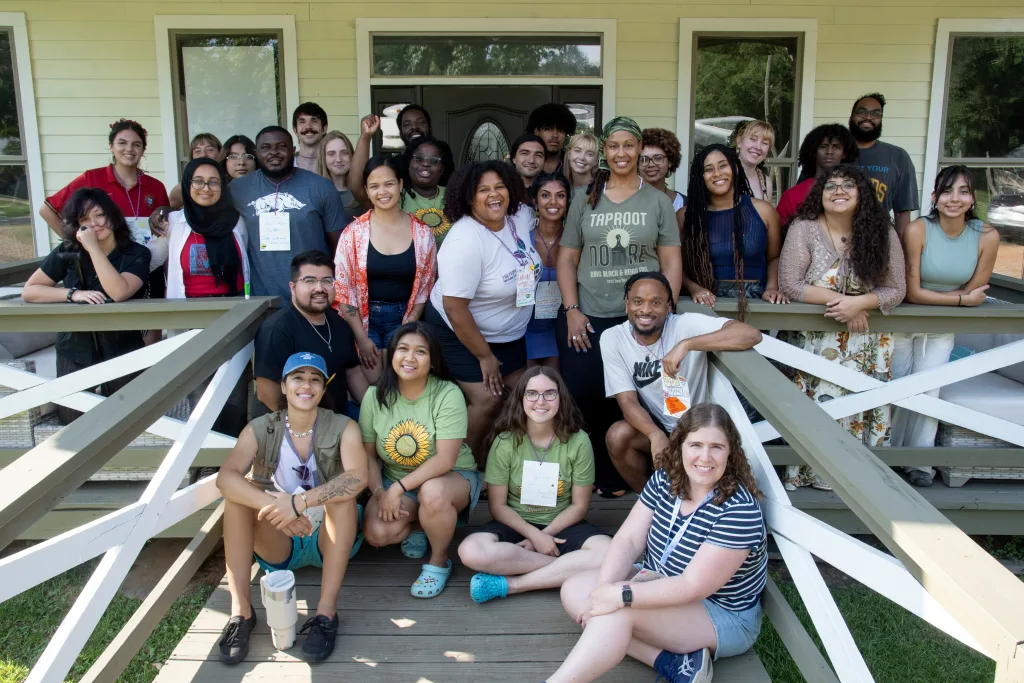
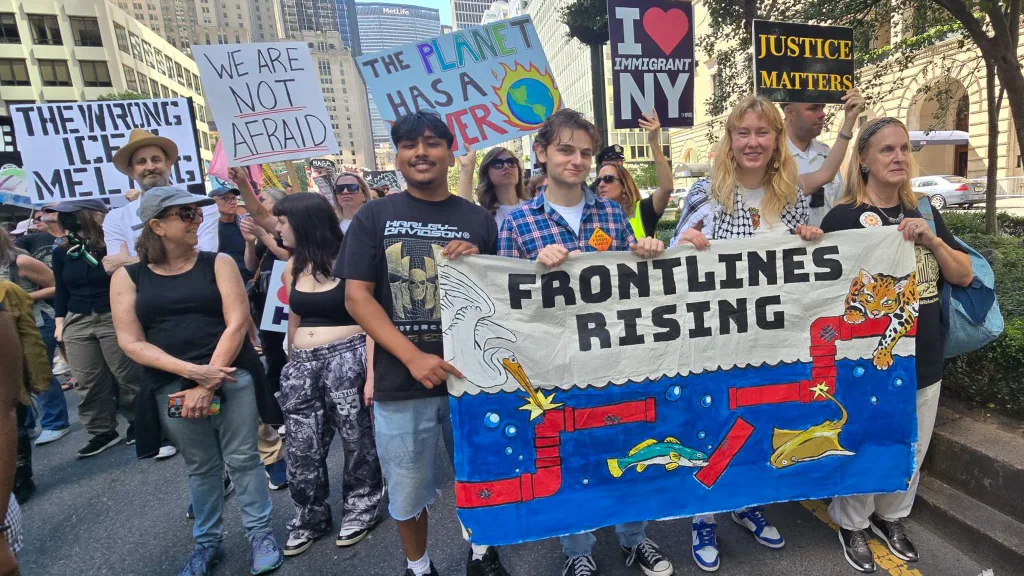
Every summer, ActionAid and partners convene organizers and youth leaders from across the country at Climate Reparations Camp: a week of learning, solidarity, and shared strategy. Some voices from that gathering are featured here.
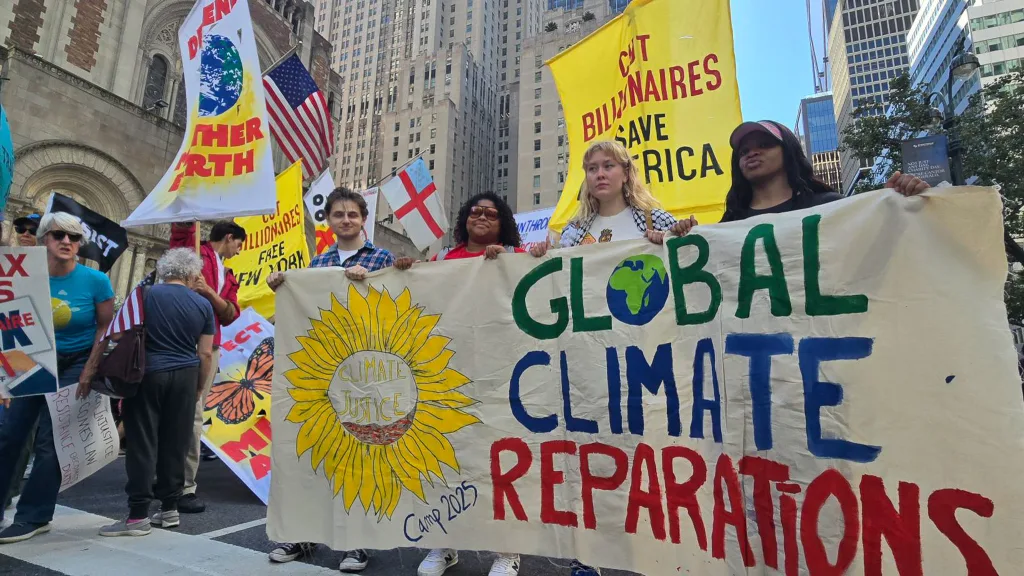
The United States has emitted more carbon pollution into the atmosphere than any other country in history. Yet it is communities in the Global South – people who contributed the least to the crisis – who are dealing with the impacts of the climate crisis. This is not a coincidence. It is an injustice with a name: climate debt. Despite this, the U.S. climate movement remains heavily focused on domestic issues. There is not enough grassroots demand in the U.S. to fulfill its international obligations: to pay what it owes in climate finance and to support adaptation and recovery in frontline communities.
Our Climate Reparations Camp (CRC) is changing that one cohort of young organizers at a time. By connecting local struggles in U.S. communities to the global systems that fuel them, we’re building the political power needed to demand real, fair-share climate action at every level. We cover 100% of participants’ costs, including travel, lodging, and meals.
Reparations, in this framework, are not just about money. They are about accountability, healing, and restoration, building a future where frontline communities everywhere can live with dignity. That includes, but goes well beyond, monetary compensation: it means confronting histories of occupation, slavery, genocide, and land theft and building the futures we deserve.
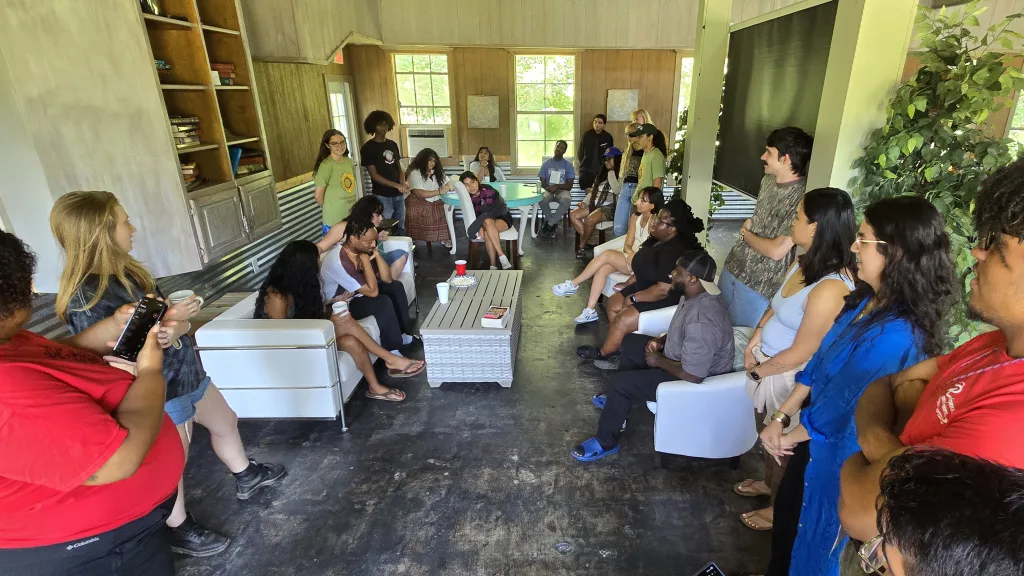
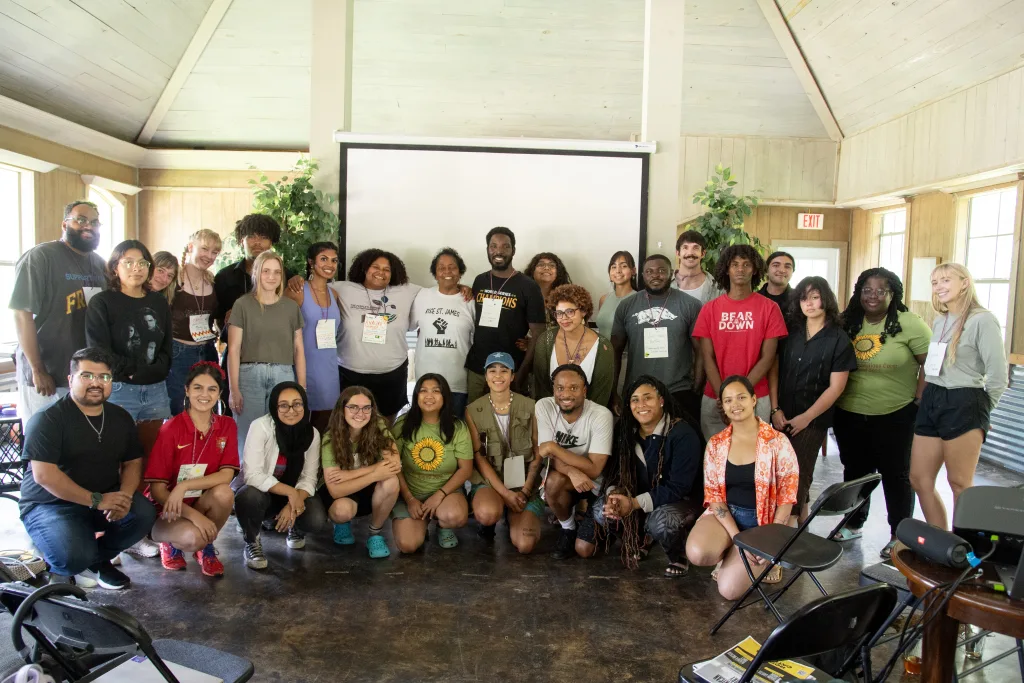
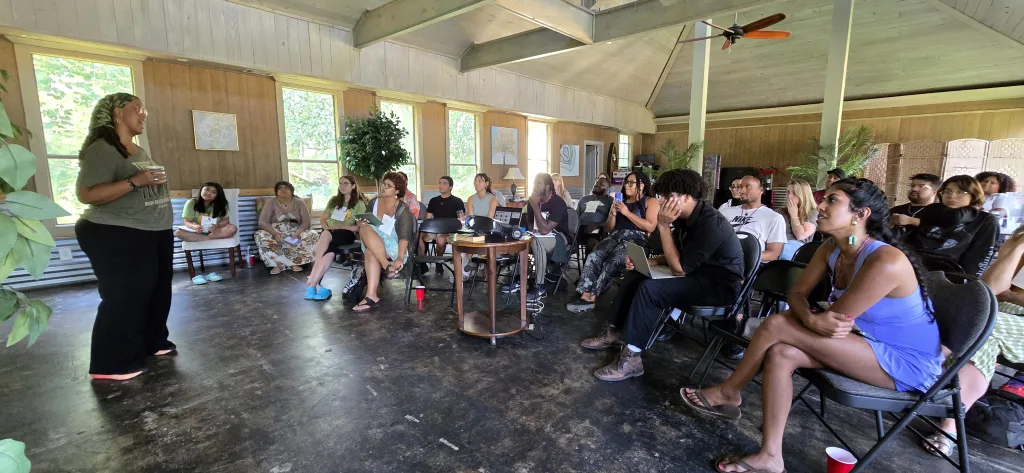
In early August 2025, just weeks before the 20th anniversary of Hurricane Katrina, 25 young activists gathered outside New Orleans for four days of skill-building, power-building, and shared vision. The Gulf South doesn’t just provide a backdrop. It is a living lesson in how climate, race, and power intersect. Leaders from Taproot Earth and Rise St. James grounded the curriculum in Cancer Alley, where petrochemical plants cluster in communities of color, where climate impacts, fossil fuel extraction, and resistance all run deep. Sharon Lavigne connected the fight in St. James Parish directly to the global reparations agenda.
Participants connected the dots between parish council meetings and U.N. climate talks, between colonial supply chains and local frontline fights, and understood, viscerally, that these are one fight at different scales. Watch the full story.
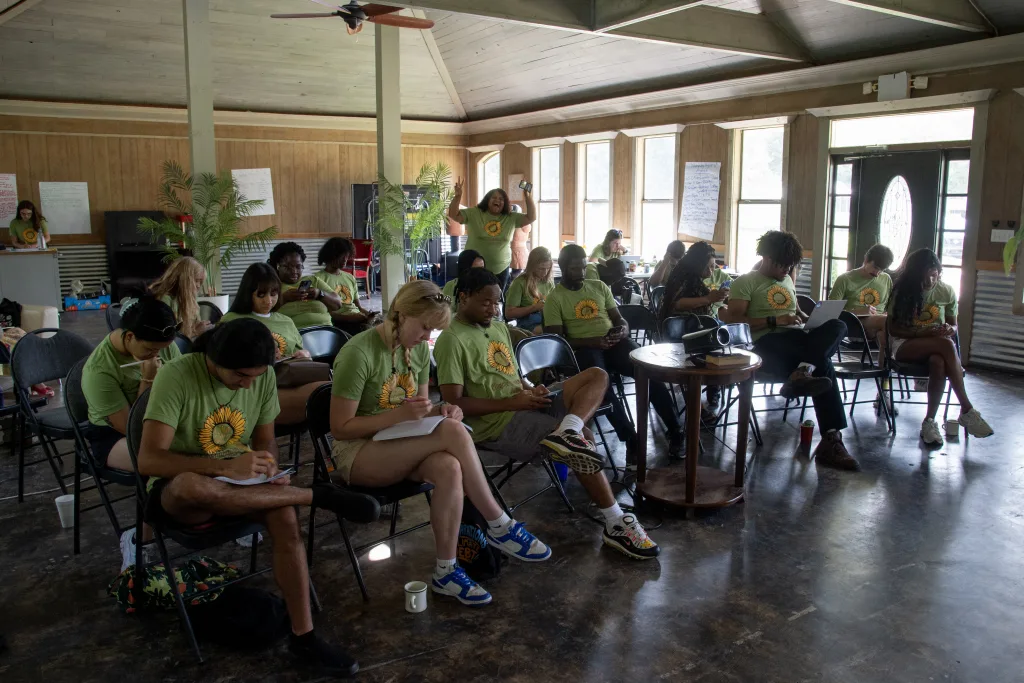
With partners Justice Is Global, Youth ‘N’ Power, and NPNA’s Climate Justice Collaborative, the CRC runs a hands-on curriculum that centers justice in every session.
Session 1 – International climate justice & fair shares: Understanding the U.S.’s outsized historical responsibility and what genuine fair-share action at scale actually looks like.
Session 2 – Climate finance as reparations: Talking plainly about the debt, climate-induced loss and damage, and what reparations must mean for communities devastated by a crisis they didn’t cause.
Session 3 – Migration & displacement: Linking storms, droughts, and climate impacts to forced migration, and to the human rights of people displaced from their homes and lands.
Session 4 – Reparations frameworks: Centering histories of occupation, slavery, genocide, and land theft, and the futures we can win. Reparations go well beyond monetary compensation.
Session 5 – Storytelling for power: Practicing narratives that connect global systems of injustice to the everyday concerns of the communities we want to move.
Session 6 – Planning for action: Mapping concrete next steps and building the relationships needed for collective action toward global climate reparations.
From immigrants to lifelong locals, from queer collectives to mutual aid networks, the 2025 cohort brought perspectives that stretched from Cancer Alley to colonial supply chains. Hear from the participants:
Camp doesn’t end at camp. Graduates are already applying their skills to events ranging from Katrina+20 to Climate Week actions, to COP30, carrying U.S. grassroots demands into national and international spheres. Here are the mobilization moments the 2025 cohort is already carrying their work into.
The U.S. owes a climate debt, and Climate Reparations Camp is training the organizers who will demand it gets paid. We bring frontline activists together to build real international solidarity between communities in the U.S. and the Global South. All participant costs are covered so no one gets left out. But we're $6,000 short of our 2026 goal, and big funders aren't stepping up. Your gift - any size - helps put an organizer in the room. Give today.