


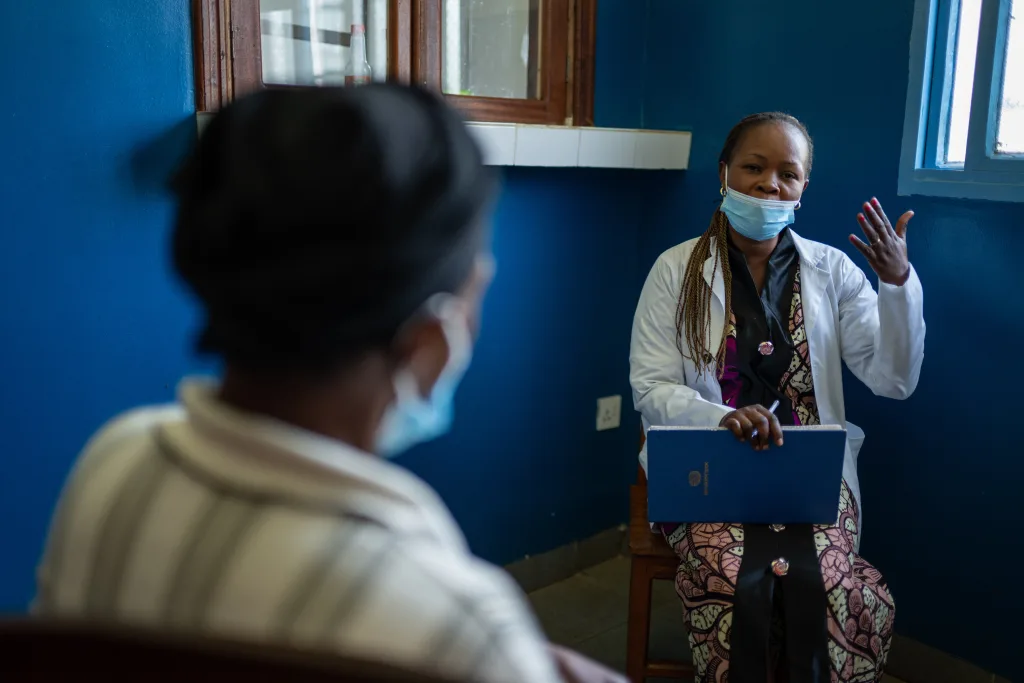
In Ituri, misinformation about Ebola is driving people away from health centers. Health Promotion Agent Hélène Kahambu Tsongo explains how this fear is leaving survivors of gender-based violence without care and why trusted, community-led action matters.
Hélène works as a Health Promotion Agent at a health center in Ituri, in the eastern Democratic Republic of Congo. Since the outbreak reached her health zone, many people have stayed away, worried they will be diagnosed with Ebola, confined, or harmed. She say:
“Patients are afraid to seek care at the health center; they hide at home.”
The consequences are serious for everyone. For women and girls facing violence, this fear creates another barrier to care. Helen shares:
“Many cases of sexual violence go unreported, and some survivors do not receive the care they need. The biggest problem is that they are afraid to come to the health centre.”
The outbreak is not the cause of this violence, but the fear surrounding it is making support harder to reach and cases harder to report.
For Hélène Kahambu Tsongo, one example shows how far the fear surrounding Ebola now reaches. A woman who has been beaten by her husband develops a fever after being hit on the head. She needs medical care, but stays home because she fears that health workers will assume she has Ebola.
Misinformation on social media has deepened distrust. Hélène says people are falsely told that anyone who visits a health center will be declared an Ebola patient, confined, and not treated. As people stay away, illnesses go untreated, and survivors of violence can be left without essential support.
An effective response must address both the virus and the misinformation that is stopping people from using essential services. It must recognize that women and girls face greater risks when health and protection services become harder to reach.
Despite this, women are sharing reliable information and following public health guidance. Hélène and other Health Promotion Agents hold discussions where women can ask questions, talk about gender-based violence, and learn how to reduce the risk of Ebola. ActionAid provides materials for these discussions.
Information shared by people who know the community and understand its concerns can help rebuild trust. Keeping these spaces safe, however, requires basic infection-prevention supplies. Hélène says the center still needs handwashing stations, disinfectant, and protective masks. She says
“This equipment is crucial to ensure the safety and well-being of the women who participate in our discussions.”
ActionAid is supporting Hélène and her colleagues to continue this work. More resources are needed so health workers can share trusted information, women can meet safely, and survivors can reach confidential care without fear.
Hélène wants continued support so trusted information can reach more women and communities, and conversations about gender-based violence can continue. She says:
“What touches me most is that there are still cases of gender-based violence. We need support to end this violence, particularly against women.”