


By Michael Mwansa (ActionAid Zambia), Geofrey Sizala (ActionAid Zambia), and Brandon Wu (ActionAid USA)
This week, the Board of the U.N. Fund for Responding to Loss & Damage (FRLD) will convene in Livingstone, Zambia – meeting for the first time on African soil. The choice of Zambia as the location for the FRLD’s eighth Board meeting (B8) is highly appropriate: Zambia is one of the most climate-vulnerable countries in the world. In addition, Zambia is a Least Developed Country (LDC) and is in the midst of a sovereign debt crisis – economic conditions that further deepen its vulnerability to climate shocks.
Zambia: at the intersection of climate vulnerability and debt crisis
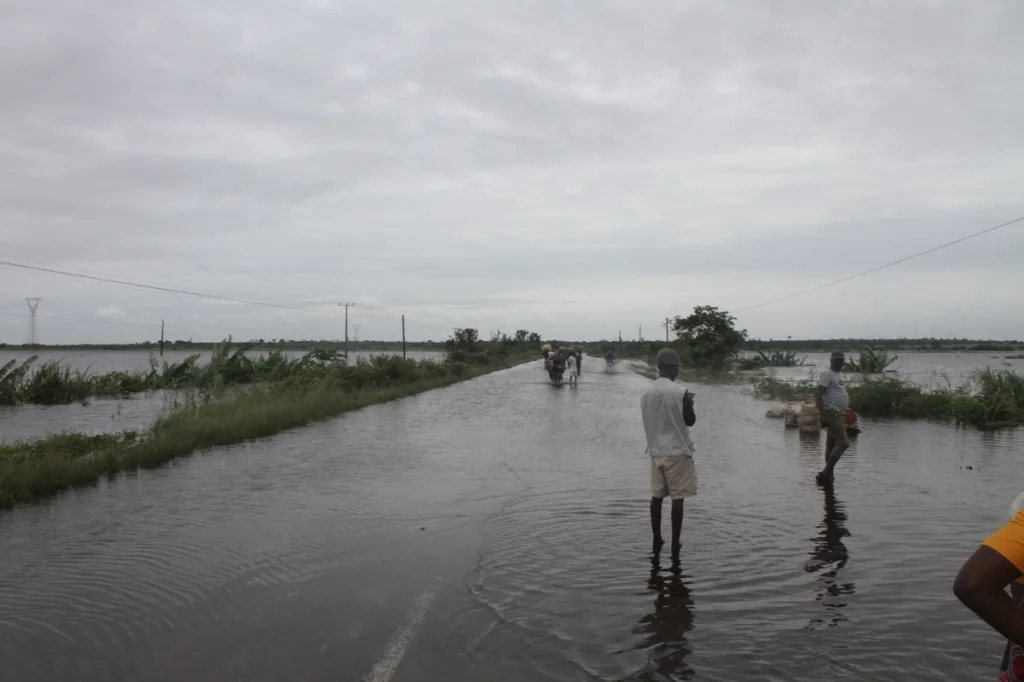
Zambians face severe losses and damages due to climate hazards such as droughts and floods affecting the water sector, agriculture, forests, fisheries, and more. The recent drought in 2024-25, estimated to be Zambia’s worst in at least two decades, put as much as a third of the population at high risk for food insecurity. Small-scale businesses, smallholder farmers, fishing camps, and forestry areas ceased operations due to reduced water levels, inconsistent energy access (Zambia is heavily reliant on hydroelectric power), food loss, and increased malnutrition among children.
The Zambian national government has taken several steps to address Loss and Damage, including increased spaces for nonstate actors to engage. In 2021, the Ministry of Green Economy and Environment was established with an open-door policy that encourages public engagement, especially for women, youth, and persons living with disabilities. A major climate change bill in 2024 created a Green Economy and Climate Change Fund including for resilience and land reclamation.
Building on these gains, the numerous challenges faced by many communities must be addressed proactively. Many small businesses that rely on electricity have not recovered from drought shocks, and global economic structures have exacerbated rather than relieved the problem. For example, women’s hair salons and welding enterprises have closed amidst the high cost of living resulting from debt servicing and prescribed spending by the International Monetary Fund (IMF), which has crippled Zambia’s ability to adequately respond to loss and damage. Floods and flash floods have also continued to impact infrastructure, resulting in loss of lives, destruction of cultural and heritage sites, and damage to houses, public buildings, bridges, roads, and electricity networks.
These impacts, both in economic and non-economic terms, mean the eighth FRLD Board meeting is taking place in a country that is at the intersection of global policy decisions, across climate, economic, and debt justice, that directly affect communities that are forced to respond to climate-induced loss and damage. Access to FRLD funds in a timely manner could be a literal life-or-death matter for many of these communities.
The task ahead for the FRLD Board
At B8, the FRLD Board must finalize some of the key policies for its startup phase, the so-called “Barbados Implementation Modalities” (BIM). Under the BIM, the FRLD is beginning to accept project proposals, though the scope remains minuscule with a total cap of $250 million available across all projects. Among the decisions the Board must take in order to operationalize the BIM are:
- How to assess project proposals to decide which will receive funding;
- How to allow for direct access to FRLD funds by national governments;
- The risk appetite and risk management framework for funded activities; and
- A framework for evaluating the results of funded activities.
Another of the tasks in front of the Board is designing a Resource Mobilization Strategy (RMS) for its operations beyond the initial BIM phase. It is crucial that, in the RMS, the Board aims for the FRLD to mobilize funds at the scale of the need: hundreds of billions of dollars each year. The FRLD should be designing its policies with this scale in mind – rather than as a small-potatoes “gap filler” that only serves to reinforce the current, deeply inadequate systems that rely too much on ad hoc humanitarian assistance and debt-inducing emergency lending. Over 200 organizations put out a letter today calling on the FRLD to implement an RMS that could deliver $400 billion annually by 2035.
Indeed, this is a core political problem facing the Board as it makes policy decisions on how it will allocate the FRLD’s money: the fact that the money available is vanishingly small. The FRLD – which is meant to be the flagship multilateral fund supporting climate-impacted communities in every developing country in the world – has received less than $1 billion in pledges since its creation over two years ago (of this, less than $450 million has actually been received). This compares to hundreds of billions of dollars in climate-induced losses inflicted on the Global South every year – not including non-economic loss & damage such as loss of life, land, and culture.
The United States features heavily in this funding shortfall. The U.S. has essentially cut all climate finance and foreign assistance from its national budget and is instead spending an estimated $11 billion per week on a senseless war of aggression against Iran. The Trump administration has already spent $200 billion on immigration enforcement in the current fiscal year. It is expected to request an astounding $1.5 trillion for the U.S. military budget in the next fiscal year.
When it comes to jailing immigrants and inflicting death and destruction at home and across the world, the U.S. government seems to have unlimited amounts of money. However, these policies are not popular, and civil society in the U.S. and other Global North countries are working hard to ensure that radical change and realignment takes place in the near future. When this happens, the FRLD must be ready – and an RMS fit for scale is a crucial element of this readiness.
We will be watching the Board closely this week at FRLD B8 in Livingstone. ActionAid is calling for the Board to create policies for a fund that works at scale, is readily accessible for directly impacted communities, and is responsive and accountable to those communities rather than to contributing governments. In addition, we call on rich-country governments from the United States, Europe, and elsewhere to make significant new pledges to the FRLD so that it can meet its mandate of supporting vulnerable communities – here in Zambia and across the Global South.